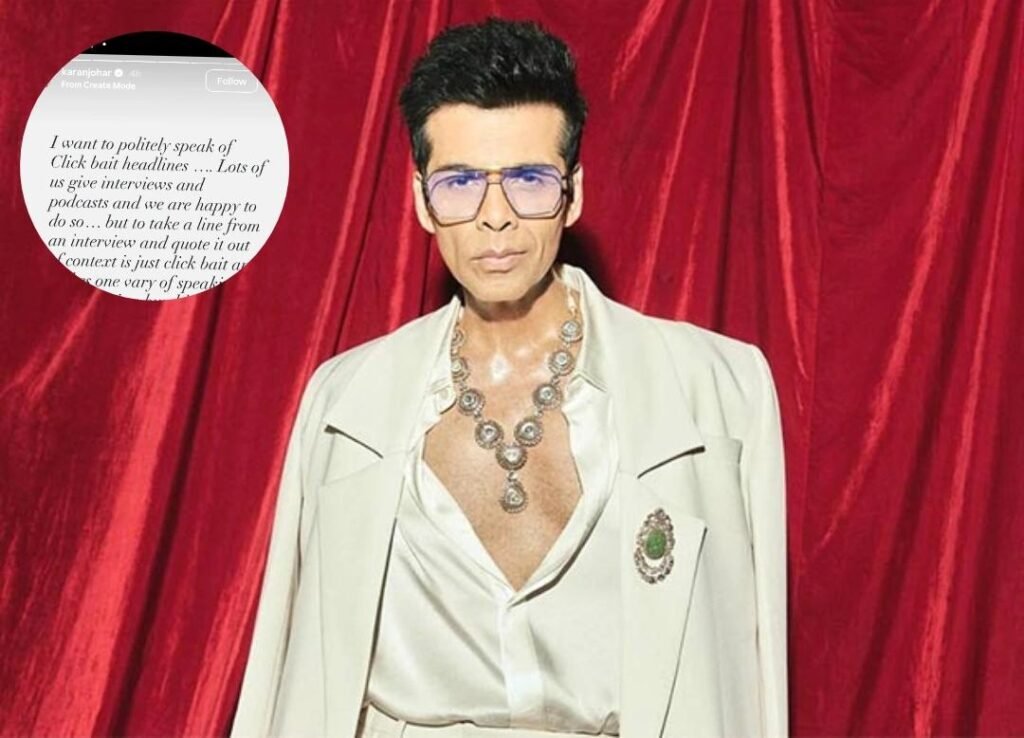
When someone as influential as Karan Johar speaks up, people listen and this time the conversation isn’t about films or fashion but something far more pressing: the way stories are told.
In a recent note shared online, Johar addressed what many have quietly observed for years the rise of clickbait culture. His concern was simple yet significant. Interviews, he pointed out are often reduced to a single line, stripped of context, and presented in a way that changes the entire meaning. What was said thoughtfully can suddenly appear controversial, even offensive, just because of how it’s framed.
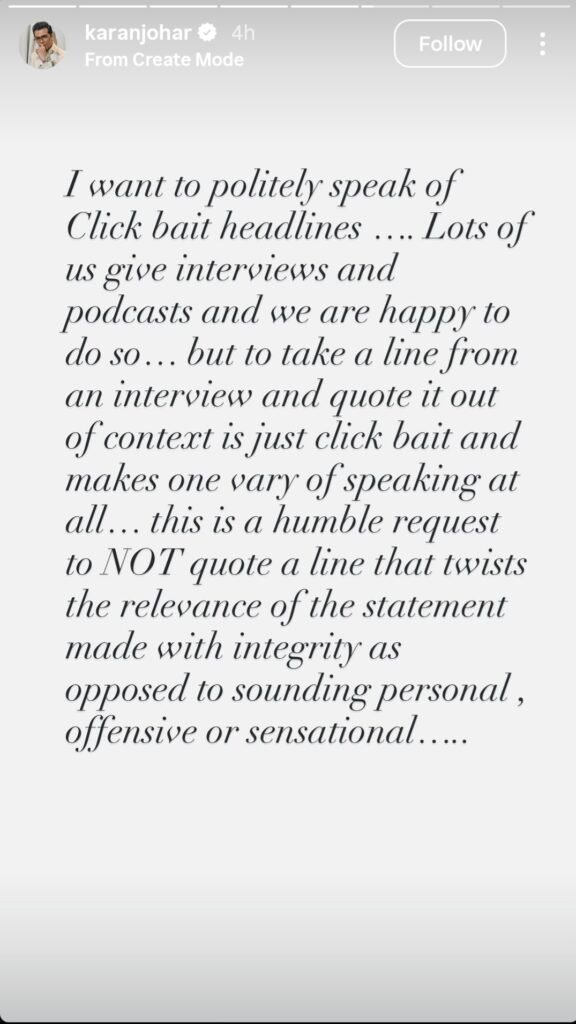
This isn’t just about one filmmaker’s frustration. It reflects a larger issue within digital media today. Headlines are no longer just summaries they are hooks designed to grab attention in seconds. And in that race for engagement, nuance is often the first casualty.
Johar’s words highlight an uncomfortable truth, when quotes are taken out of context they don’t just misinform audiences they also discourage honest conversations. If every statement risks being twisted into something sensational, it’s only natural for public figures to become more guarded. Over time, that affects the quality of interviews, making them less candid and more rehearsed.
There’s also a deeper ethical layer to this. Journalism, at its core, is about trust. Readers expect that what they’re consuming is a fair representation of reality not a distorted version designed for clicks. When that trust is compromised, it impacts the credibility of platforms as well.
also read: Dhurandhar 2 Star Gaurav Gera Shares a Letter He Wrote 20 Years Ago During His Struggle Days
At the same time, it’s worth acknowledging why clickbait exists in the first place. The digital ecosystem thrives on attention. More clicks mean more visibility which often translates to revenue. In such an environment, the pressure to stand out is constant. But where should the line be drawn?
Johar’s statement doesn’t attack the media, it appeals to it. It’s a reminder that storytelling carries responsibility. A headline can attract readers without misleading them. A quote can be impactful without being taken out of context. Striking that balance is what separates responsible reporting from mere content churn.
For readers this also serves as a gentle nudge. It’s easy to react to a headline share it, and move on. But taking a moment to look beyond the surface to read, understand and question can make a difference. After all, media consumption is a two way street.
In the end, this isn’t just about one industry or one individual. It’s about how narratives are shaped in a fast paced digital world. And perhaps, conversations like these are exactly what’s needed to bring the focus back to authenticity over amplification.