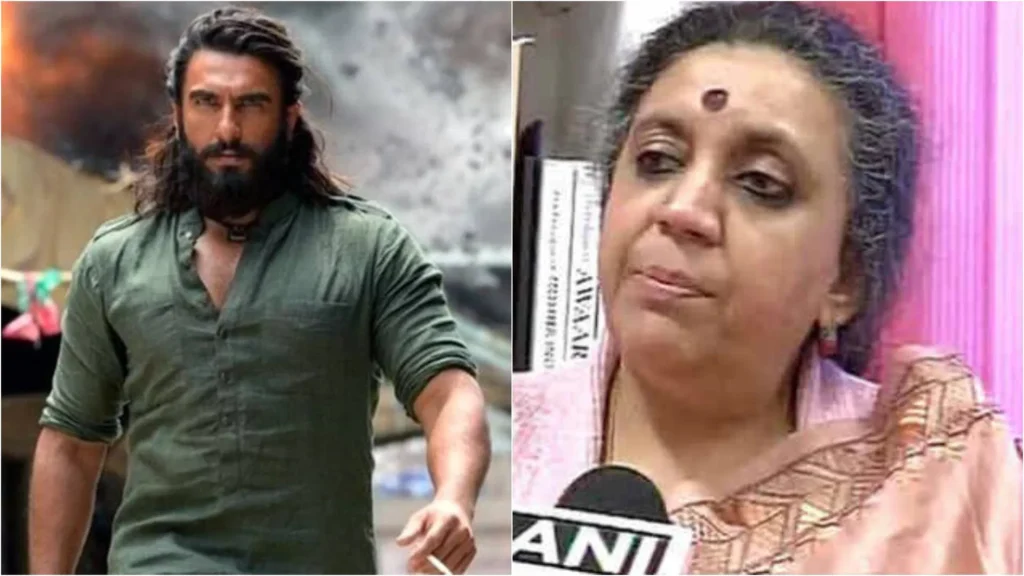
Ira Bhaskar, the mother of actor Swara Bhaskar, has voiced strong criticism of the political undertones in the film Dhurandhar. She argued that the movie’s narrative presents Muslims in a largely negative light and contributes to harmful stereotypes.
Speaking during a discussion hosted by the civil society platform Karwan‑e‑Mohabbat, Ira Bhaskar shared her concerns about the way communities are portrayed in certain contemporary films. According to her, Dhurandhar appears to frame Muslims—especially those associated with Pakistan—primarily as violent individuals, such as terrorists or criminals, while leaving little space for nuanced or everyday portrayals.
Bhaskar said that this pattern of representation can reinforce prejudices and shape public perceptions in troubling ways. She suggested that cinema, which has a powerful cultural influence, should be careful about reducing entire communities to a narrow set of stereotypes. In her view, storytelling that consistently links Muslims with violence risks deepening social divisions rather than encouraging understanding.
also read : When Shahid Kapoor Playfully Accused Shah Rukh Khan of Imitating Amitabh Bachchan on Stage
While acknowledging that Dhurandhar has received attention for its production scale and technical execution, Bhaskar emphasized that artistic quality does not negate the responsibility filmmakers carry when dealing with sensitive themes. She said audiences should critically examine the messages embedded in popular entertainment, especially when such stories revolve around national security or cross-border tensions.
The film was directed by Aditya Dhar, known for helming the blockbuster Uri: The Surgical Strike. Like several recent films centered on geopolitical conflicts, Dhurandhar has drawn both praise and criticism for its strong nationalist tone. Supporters argue that such stories highlight security concerns and patriotic themes, while critics feel they may oversimplify complex political realities.
Bhaskar’s remarks have added to the ongoing conversation around representation and ideology in Indian cinema. Over the past few years, debates about the political messaging in films have become increasingly common, with audiences and commentators questioning how certain communities and historical events are depicted on screen.
The discussion around Dhurandhar reflects this broader debate: how filmmakers balance dramatic storytelling with responsible representation. As Indian cinema continues to explore themes of nationalism, security, and identity, voices like Ira Bhaskar’s highlight the need for thoughtful narratives that capture complexity rather than reinforcing stereotypes.