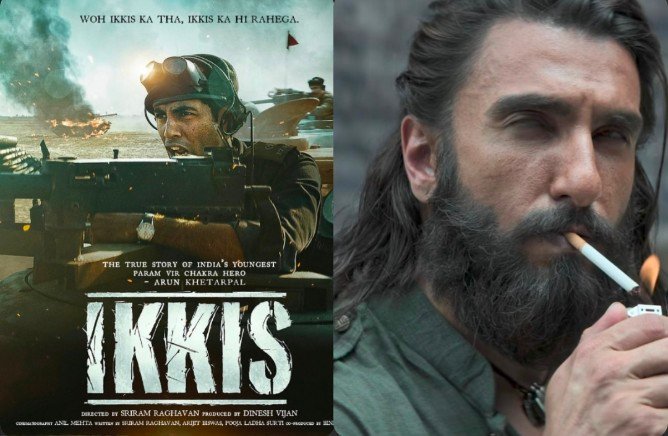
Sriram Raghavan’s war drama Ikkis, starring Agastya Nanda, Dharmendra, and Jaideep Ahlawat, has become the center of intense online discussion — not just for its emotional storytelling, but for a powerful and controversial disclaimer that appears during the film’s mid-credits.
The disclaimer, which has rapidly gone viral on social media, addresses the portrayal of Brigadier K. M. Nisaar, played by Jaideep Ahlawat. While the character is shown as a compassionate and humane Pakistani officer in the film, the note clarifies that such kindness should be seen as an exception rather than the norm.
The message goes on to make a strong political statement, claiming that Pakistan’s armed forces are “not trustworthy at all,” alleging cruel treatment of Indian soldiers and civilians during both war and peacetime, and accusing them of violating international agreements such as the Geneva Convention. It further urges Indian citizens to remain alert in the face of terrorism allegedly sponsored by Pakistan.
While Ikkis has largely been appreciated for its emotional depth and nuanced depiction of humanity during wartime, the disclaimer has unsettled a section of viewers. Many social media users pointed out the contrast between the film’s anti-war, humanistic narrative and the blunt, confrontational tone of the message.
This contrast sparked widespread debate across platforms like X (formerly Twitter), Instagram, and Reddit, with users divided in their opinions. Some felt the disclaimer was unnecessary and undermined the film’s artistic intent, while others defended it as a reflection of historical realities and national sentiment.
A recurring term that emerged during these discussions is the “Dhurandhar effect.” Several netizens suggested that the success of Aditya Dhar’s Dhurandhar, known for its unapologetically nationalistic approach, may have influenced the inclusion of the hard-hitting disclaimer in Ikkis. According to these users, filmmakers now feel emboldened to include more direct political messaging due to changing audience preferences.
Despite the controversy, Ikkis continues to attract attention — both for its cinematic merits and for the broader conversation it has sparked around patriotism, storytelling, and the evolving tone of Indian war films. Whether the disclaimer will ultimately strengthen or divide audience perception remains an open question, but it has undeniably ensured that Ikkis stays firmly in public discourse.