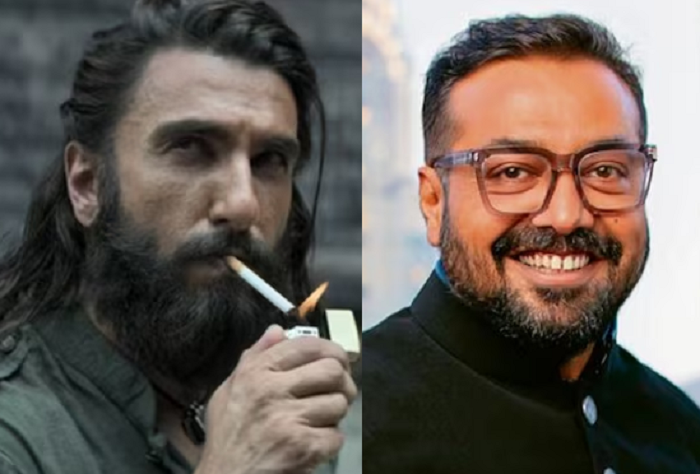
Filmmaker Anurag Kashyap, known for his unapologetically honest opinions, has shared a nuanced and balanced take on Ranveer Singh’s blockbuster Dhurandhar. While the director showered praise on the film’s scale, performances, and technical brilliance, he also openly admitted that certain political undertones in the narrative did not resonate with him personally.
Kashyap described Dhurandhar, directed by Aditya Dhar, as a “completed film” — a rare compliment in today’s cinema landscape. He particularly highlighted the movie’s technical finesse, expansive scale, and powerful performances, with special mention of Ranveer Singh’s commanding screen presence. According to Kashyap, Ranveer’s ability to hold the frame and engage audiences is one of the film’s biggest strengths. stay tuned with The GossipGully.com for more updates
However, the filmmaker did not shy away from expressing his discomfort with some political allusions in the film.
Kashyap pointed to specific dialogues, including one delivered by R. Madhavan’s character and another where Ranveer Singh’s character declares, “Yeh naya India hai”. These moments, he said, left him indifferent and slightly irritated, as they brought politics into the narrative in a way that didn’t align with his personal worldview.
Despite this, Kashyap was careful to clarify that his ideological disagreement did not diminish the film’s cinematic quality. He emphasized that every filmmaker’s perspective is shaped by their upbringing, environment, and lived experiences. Acknowledging this, Kashyap expressed respect for Aditya Dhar’s integrity and creative honesty.
Importantly, Kashyap made it clear that he would never publicly attack a fellow filmmaker over ideological differences. If he ever wished to discuss the political aspects of Dhurandhar, he said he would prefer a private conversation with Aditya Dhar, rather than turning it into public criticism or controversy.
In conclusion, Kashyap maintained that Dhurandhar remains an impressive cinematic experience, regardless of differing political interpretations. His review stands out for striking a rare balance — offering high praise for filmmaking craft while respectfully acknowledging ideological differences, without bitterness or hostility.