A recent directive issued by the Badri-Kedar Temple Committee has triggered a nationwide conversation on faith, access and tradition at two of India’s most sacred pilgrimage sites, Kedarnath Temple and Badrinath Temple.
The committee has announced that non Hindu devotees seeking darshan at these temples will now be required to submit an affidavit declaring their belief in Sanatan Dharma. The move, according to officials is aimed at preserving the sanctity and traditional ethos of the shrines.
Committee chairman Hemant Dwivedi clarified that the rule applies uniformly to all non Hindu visitors. “Those who have faith in Sanatan Dharma and can provide a written declaration affirming the same are welcome” he stated while addressing the media.
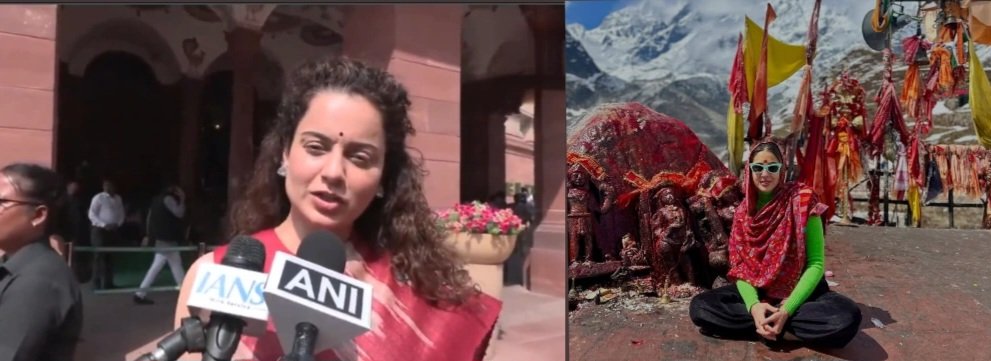
The directive has gained significant attention due to its potential impact on public figures particularly actor Sara Ali Khan, who has frequently visited Kedarnath over the years. Known for her spiritual inclination, Sara has often shared moments from her visits to the Himalayan shrine, especially since filming her debut movie Kedarnath in the region.
Dwivedi noted that Sara Ali Khan would still be allowed to offer prayers, provided she complies with the newly introduced requirement. “If she expresses her devotion towards Sanatan Dharma and submits the affidavit she will be permitted,” he said.
The development has also drawn reactions from political and film circles. Actor & politician Kangana Ranaut weighed in on the matter, suggesting there should be no hesitation in openly declaring one’s faith. Her remarks have further fueled discussions across social and political platforms.
also read: Ranveer Singh’s ‘Dhurandhar: The Revenge’ Sets New Benchmark in Advance Bookings, Overtakes ‘Jawan’
While temple authorities maintain that the step is rooted in preserving religious traditions, critics and observers argue that it raises broader questions about inclusivity and religious freedom at public places of worship.
The debate continues to unfold as devotees, legal experts, and public figures weigh in on the implications of the rule, one that sits at the intersection of faith, identity and constitutional values in modern India.