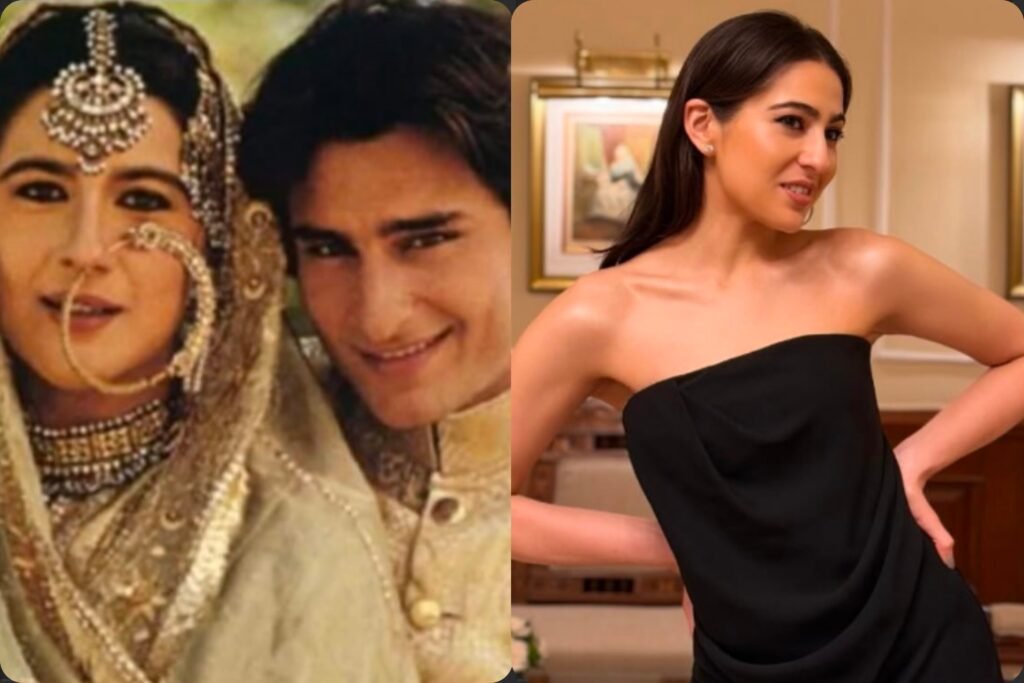
Sara Ali Khan has often spoken candidly about her life, but one of her most thoughtful reflections has been about growing up in a household shaped by two different religions. The actor, who is the daughter of Saif Ali Khan and Amrita Singh, once opened up about how she navigated questions of identity and belief from a very young age.
In an earlier interaction, Sara recalled a moment from her childhood when curiosity led her to ask her mother a question that many children from interfaith families eventually wonder about. With her father being Muslim and her mother Sikh, Sara wanted clarity. She remembered asking Amrita Singh, “Who am I?”—a simple question that carried deep emotional and cultural weight.
According to Sara, her mother’s response was calm, grounded, and empowering. Amrita told her that before anything else, she was an Indian. Religion, she explained, was a personal choice and something Sara could understand and decide for herself as she grew older. That answer stayed with Sara and helped her form a balanced outlook on faith and identity.
Sara has repeatedly said that she was never forced to follow one religion over the other. Instead, she was exposed to both traditions with equal respect. She has spoken about celebrating festivals from both faiths and learning the values they teach, rather than focusing on labels. For her, spirituality has always been about belief, discipline, and gratitude rather than strict boundaries.
The actor, who often visits temples and dargahs alike, believes that faith should bring peace, not division. She has said that she finds comfort in prayer, regardless of where it happens, and that her upbringing taught her to respect all religions equally.
Sara’s openness about her family background has resonated with many fans, especially in a country as diverse as India. At a time when conversations around religion can often become sensitive or polarising, her words highlight the importance of understanding, choice, and coexistence.
By sharing her personal experience, Sara Ali Khan continues to present herself as someone rooted in modern values while respecting tradition. Her story reflects how identity can be shaped not by conflict, but by acceptance—and how meaningful conversations at home can leave a lifelong impact.